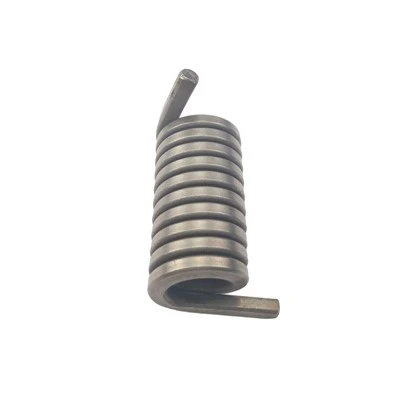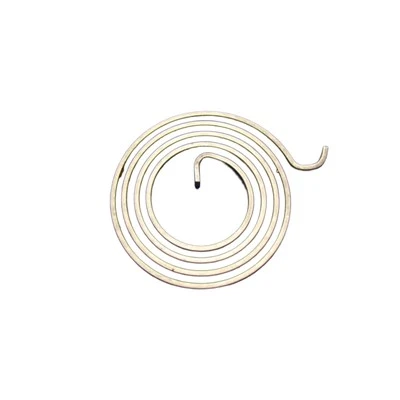
Hey there! As a supplier of Flat Coil Torsion Springs, I've seen firsthand how important it is to measure these springs accurately. Whether you're an engineer designing a new product or a technician maintaining existing equipment, getting the dimensions right can make all the difference. In this blog post, I'll share some tips and techniques on how to measure the dimensions of a flat coil torsion spring accurately.
Why Accurate Measurements Matter
Before we dive into the measurement process, let's talk about why accurate measurements are so important. A flat coil torsion spring is a precision component that is designed to provide a specific amount of torque or force. If the dimensions of the spring are off even by a small amount, it can affect the performance of the spring and the overall functionality of the product it's used in.
For example, if the inner diameter of the spring is too small, it may not fit properly in the application. On the other hand, if the outer diameter is too large, it may interfere with other components. Similarly, if the number of coils or the pitch of the spring is incorrect, it can affect the spring's torque and deflection characteristics.
Tools You'll Need
To measure the dimensions of a flat coil torsion spring accurately, you'll need a few basic tools. Here's what you'll need:
- Micrometer: A micrometer is a precision measuring tool that can measure the thickness, diameter, and length of the spring with high accuracy.
- Vernier Caliper: A vernier caliper is another measuring tool that can be used to measure the outer diameter, inner diameter, and length of the spring.
- Ruler: A ruler can be used to measure the overall length of the spring and the distance between the ends of the spring.
- Spring Tester: A spring tester is a specialized tool that can measure the torque and deflection characteristics of the spring.
Measuring the Inner and Outer Diameters
The first step in measuring a flat coil torsion spring is to measure the inner and outer diameters. To measure the inner diameter, place the spring on a flat surface and use a micrometer or vernier caliper to measure the distance across the inside of the spring. Make sure to measure at the widest point of the spring.
To measure the outer diameter, use the same tools to measure the distance across the outside of the spring. Again, make sure to measure at the widest point of the spring.
Measuring the Wire Diameter
The wire diameter is an important dimension that can affect the performance of the spring. To measure the wire diameter, use a micrometer to measure the thickness of the wire at several points along the spring. Take the average of these measurements to get an accurate value for the wire diameter.
Measuring the Number of Coils
The number of coils is another important dimension that can affect the performance of the spring. To measure the number of coils, count the number of complete turns of the spring. Make sure to include any partial turns at the ends of the spring.
Measuring the Pitch
The pitch is the distance between adjacent coils of the spring. To measure the pitch, use a ruler or vernier caliper to measure the distance between the centers of two adjacent coils. Make sure to measure at several points along the spring and take the average of these measurements to get an accurate value for the pitch.
Measuring the Overall Length
The overall length of the spring is the distance between the ends of the spring. To measure the overall length, use a ruler or vernier caliper to measure the distance between the outermost points of the spring.
Measuring the Torque and Deflection
In addition to measuring the physical dimensions of the spring, it's also important to measure the torque and deflection characteristics of the spring. To measure the torque, use a spring tester to apply a known amount of force to the spring and measure the resulting deflection. The torque is calculated by multiplying the force by the distance from the center of the spring to the point where the force is applied.
To measure the deflection, use a spring tester to apply a known amount of torque to the spring and measure the resulting deflection. The deflection is the amount of rotation or movement of the spring under the applied torque.
Tips for Accurate Measurements
Here are some tips to help you measure the dimensions of a flat coil torsion spring accurately:
- Use the Right Tools: Make sure to use the right tools for the job. A micrometer and vernier caliper are essential for measuring the dimensions of the spring with high accuracy.
- Measure at Multiple Points: To get an accurate value for the dimensions of the spring, measure at multiple points along the spring. This will help to account for any variations in the spring's dimensions.
- Take Your Time: Measuring the dimensions of a flat coil torsion spring can be a time-consuming process, but it's important to take your time and do it right. Rushing through the measurement process can lead to inaccurate results.
- Check Your Measurements: Once you've measured the dimensions of the spring, double-check your measurements to make sure they're accurate. This will help to avoid any mistakes or errors in the measurement process.
Conclusion
Measuring the dimensions of a flat coil torsion spring accurately is essential for ensuring the performance and functionality of the spring. By using the right tools, measuring at multiple points, taking your time, and checking your measurements, you can ensure that you get accurate results.
If you're in the market for Flat Coil Torsion Springs, Flat Coil Spiral Springs, or Metal Spiral Springs, we're here to help. We offer a wide range of high-quality springs that are designed to meet the needs of various applications. Contact us today to learn more about our products and services and to discuss your specific requirements.
References
- "Spring Design Handbook," Third Edition, by William A. Roth.
- "Mechanical Springs," by Neil S. Ames.