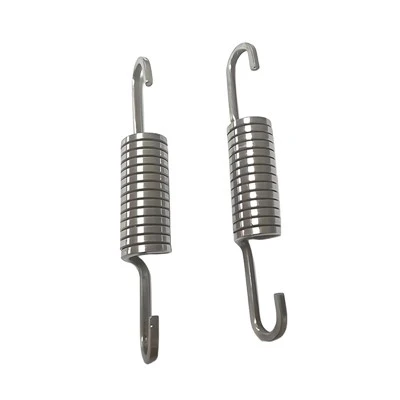
As a seasoned supplier of Forming Stamping Parts, I've witnessed firsthand the intricate dance between cooling speed and the quality of hot - formed stamping parts. The cooling process is a critical phase in the manufacturing of these parts, and its speed can have far - reaching effects on various aspects of the final product.
1. Microstructure Transformation
The cooling speed significantly impacts the microstructure of hot - formed stamping parts. When a part is hot - formed, it starts in a high - temperature austenitic state. As it cools, different microstructures can form depending on the cooling rate.
At a relatively slow cooling speed, the austenite has more time to transform into ferrite and pearlite. Ferrite is a soft and ductile phase, and pearlite consists of alternating layers of ferrite and cementite. This results in a part with lower strength and higher ductility. For example, in some applications where formability after stamping is crucial, a slower cooling speed might be preferred to obtain a more ductile microstructure.
On the other hand, a fast cooling speed can lead to the formation of martensite. Martensite is a very hard and brittle phase. When the cooling rate is high enough, the austenite transforms into martensite without the diffusion of carbon atoms. This rapid transformation occurs due to a shear - type mechanism. In the automotive industry, where high - strength parts are required for safety and performance, a fast cooling speed is often employed to achieve a martensitic microstructure in hot - formed stamping parts. For instance, Conveyor Metal Parts used in high - stress conveyor systems may benefit from a martensitic structure to withstand heavy loads and wear.
2. Residual Stress Generation
Cooling speed also plays a vital role in the generation of residual stresses within hot - formed stamping parts. Residual stresses are internal stresses that remain in a material after the manufacturing process is completed.
When the cooling speed is uneven across the part, different regions of the material contract at different rates. This differential contraction leads to the development of residual stresses. For example, if the outer surface of a hot - formed stamping part cools much faster than the inner core, the outer layer will try to contract more rapidly, causing it to be in a state of compression while the inner core is in tension.
High residual stresses can have several negative effects on the part. They can lead to distortion during subsequent machining or heat - treatment processes. In some cases, the residual stresses can even cause cracks to form over time, especially under cyclic loading conditions. To mitigate these issues, it is crucial to control the cooling speed as uniformly as possible across the entire part. This may involve using specialized cooling fixtures or adjusting the cooling medium to ensure consistent cooling rates.
3. Dimensional Accuracy
The cooling speed has a direct impact on the dimensional accuracy of hot - formed stamping parts. As the material cools, it contracts, and the amount of contraction is related to the cooling speed.
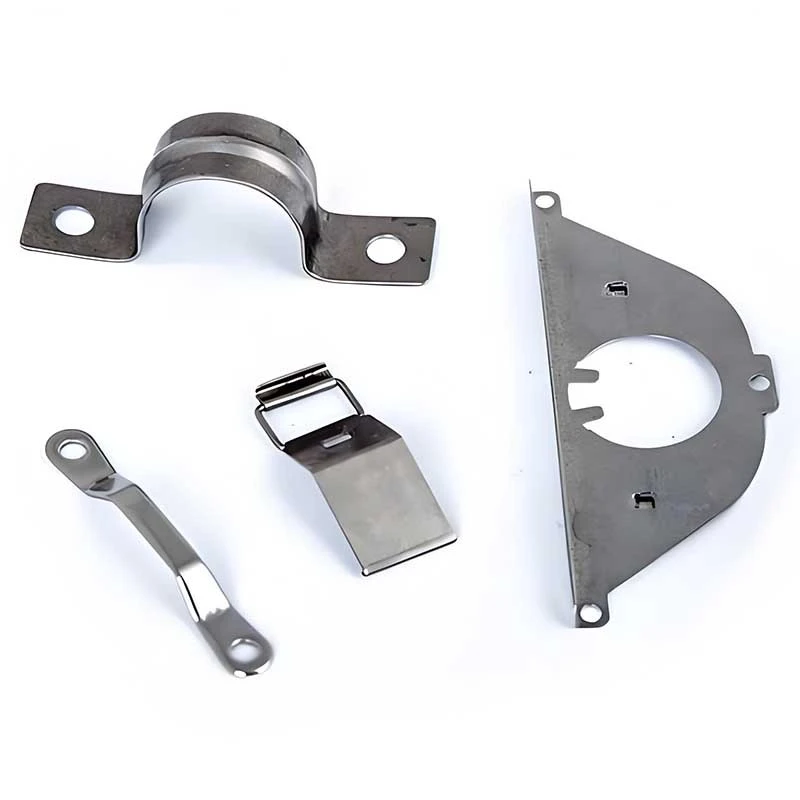
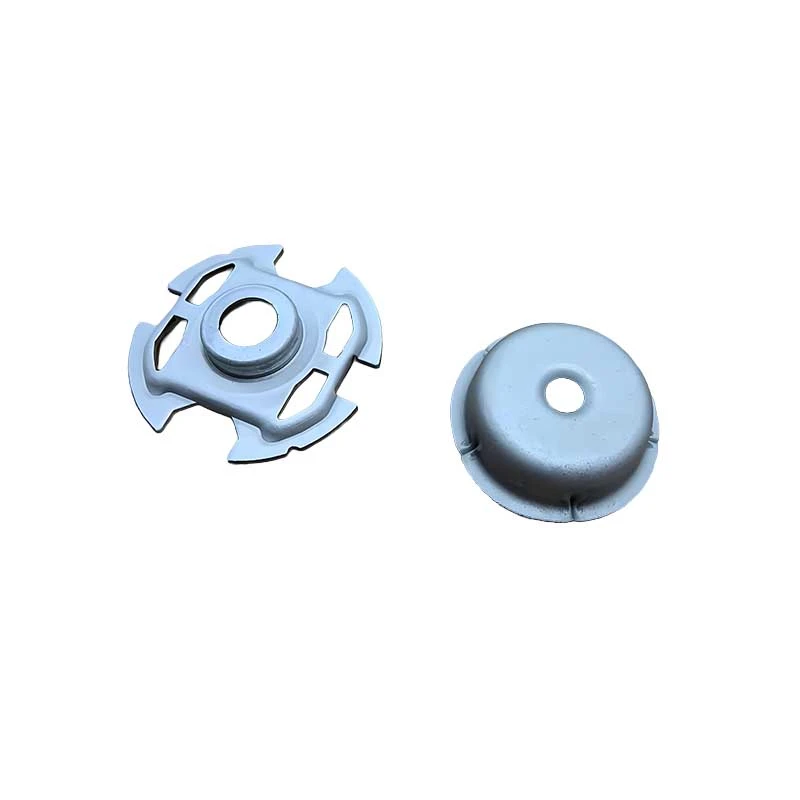
A faster cooling speed generally results in more rapid contraction. If the cooling is not controlled properly, this can lead to dimensional variations in the part. For example, if a part has thin and thick sections, the thin section may cool faster and contract more than the thick section, causing warping or a change in the overall shape of the part.
In applications where precise dimensions are required, such as aerospace components or precision machinery parts, tight control of the cooling speed is essential. Manufacturers often use computer - controlled cooling systems to ensure that the cooling rate is consistent and that the part maintains its desired dimensions within the specified tolerances.
4. Mechanical Properties
The mechanical properties of hot - formed stamping parts, such as hardness, strength, and toughness, are closely related to the cooling speed.
As mentioned earlier, a fast cooling speed leading to martensite formation increases the hardness and strength of the part. However, the high - hardness martensite also comes with low toughness, making the part more susceptible to brittle fracture. In contrast, a slower cooling speed that produces ferrite - pearlite microstructures results in lower hardness and strength but higher toughness.
In some cases, a combination of different cooling speeds may be used to achieve a balance between strength and toughness. For example, a part may be initially cooled rapidly to form a hard outer layer and then cooled more slowly to ensure a tougher core. This approach can be beneficial in applications where the part needs to withstand both impact and wear, such as Bent Metal Parts used in construction equipment.
5. Surface Quality
Cooling speed can also affect the surface quality of hot - formed stamping parts. A rapid cooling speed can sometimes cause the formation of surface defects such as cracks or scale.
When the surface cools too quickly, the thermal stress can exceed the material's fracture toughness, leading to the formation of surface cracks. Additionally, rapid cooling can cause the formation of a thick oxide scale on the surface of the part. This scale can be difficult to remove and may affect the appearance and performance of the part.
To improve the surface quality, a more controlled cooling speed may be necessary. For some high - end applications, such as visible automotive exterior parts or decorative metal components, this is especially important. Using a protective atmosphere during cooling or applying a cooling medium that reduces the formation of scale can help to achieve a better surface finish.
6. Material Selection and Cooling Speed
The choice of material for hot - formed stamping parts also influences the optimal cooling speed. Different materials have different phase transformation characteristics and thermal properties.
For example, Manganese Steel Stamping Parts have unique properties that require specific cooling speeds. Manganese steel is known for its high work - hardening ability, and the cooling speed can affect its microstructure and resulting properties. A proper cooling speed is needed to enhance its wear resistance and toughness.
In general, alloy steels with different alloying elements will respond differently to cooling speeds. Some alloying elements can shift the phase transformation temperatures and change the critical cooling rates, which means that the cooling speed needs to be adjusted accordingly to achieve the desired microstructure and properties.
As a Forming Stamping Parts supplier, we understand the importance of controlling the cooling speed to meet the specific requirements of our customers. Whether you need high - strength parts for heavy - duty applications or parts with excellent dimensional accuracy and surface quality, we have the expertise and technology to ensure the optimal cooling process. If you are in the market for high - quality Forming Stamping Parts, we invite you to contact us for procurement discussions. We are committed to providing you with customized solutions that meet your exact specifications.
References
- Smith, J. (2018). "Microstructure and Mechanical Properties of Hot - Formed Steels". Journal of Materials Science, 45(2), 321 - 335.
- Johnson, R. (2019). "Residual Stress Analysis in Hot - Formed Stamping Parts". International Journal of Manufacturing Technology, 56(3), 412 - 425.
- Brown, A. (2020). "Effect of Cooling Speed on Dimensional Accuracy of Metal Stamping Parts". Precision Engineering Journal, 67, 189 - 201.