Determining the pre - load of a flat coil spiral spring is a crucial aspect in the design and application of these springs. As a supplier of Flat Coil Spiral Springs, I have witnessed firsthand the importance of getting this right. In this blog, I will share some insights on how to accurately determine the pre - load of a flat coil spiral spring.
Understanding the Basics of Flat Coil Spiral Springs
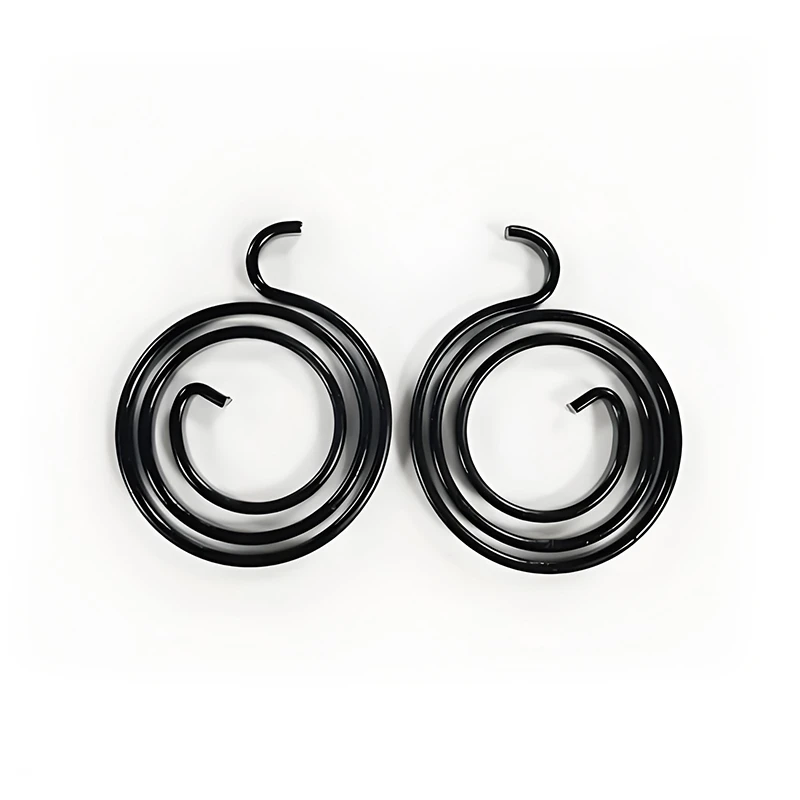
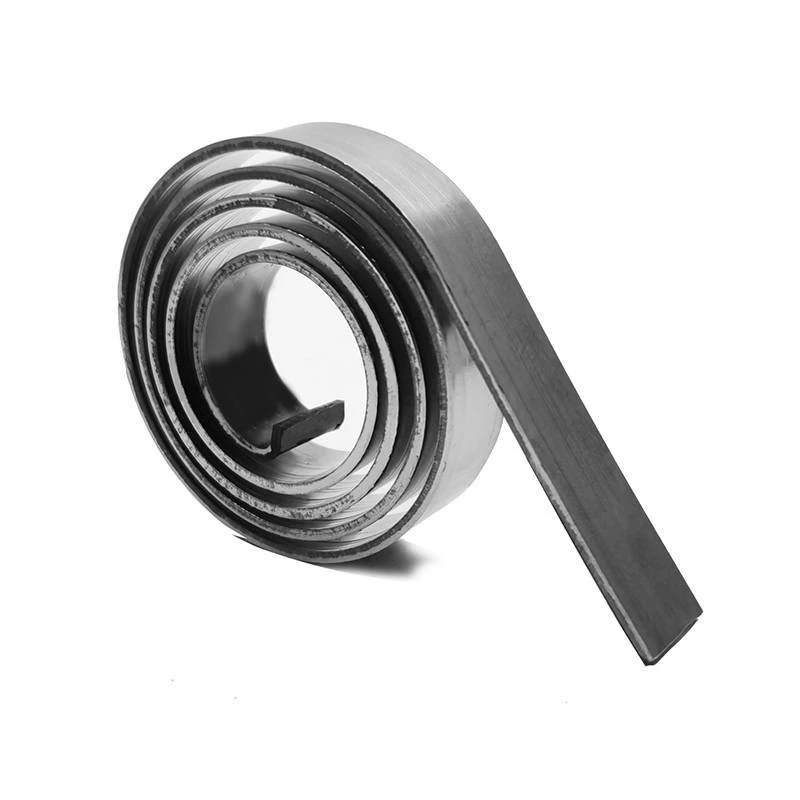
Before delving into the pre - load determination, it's essential to understand what flat coil spiral springs are. A Flat Coil Spiral Spring is a type of spring that is made by winding a flat strip of material into a spiral shape. These springs are commonly used in various applications, such as watches, clocks, and small mechanical devices, where they provide a compact and efficient source of torque.
The pre - load of a spring is the initial force or torque that is applied to the spring when it is installed in a system. This pre - load is necessary to ensure that the spring functions properly and provides the required force or torque throughout its operation.
Factors Affecting the Pre - Load of a Flat Coil Spiral Spring
Several factors can affect the pre - load of a flat coil spiral spring. These factors need to be carefully considered when determining the pre - load.
Material Properties
The material used to make the spring plays a significant role in determining its pre - load. Different materials have different elastic moduli, which affect the spring's stiffness. For example, steel has a relatively high elastic modulus, which means that a steel flat coil spiral spring will be stiffer compared to a spring made of a material with a lower elastic modulus, such as copper. The material's yield strength is also important, as it determines the maximum stress that the spring can withstand before it permanently deforms.
Geometric Dimensions
The geometric dimensions of the spring, such as the width, thickness, and number of coils, also affect the pre - load. A wider and thicker spring will generally have a higher pre - load compared to a narrower and thinner spring. The number of coils also influences the pre - load, as more coils can provide more torque.
Coiling Process
The coiling process can have an impact on the pre - load of the spring. The tension applied during the coiling process can introduce internal stresses in the spring, which can affect its pre - load. A consistent and well - controlled coiling process is essential to ensure that the pre - load is accurate and repeatable.
Methods for Determining the Pre - Load
There are several methods that can be used to determine the pre - load of a flat coil spiral spring.
Analytical Calculation
One of the most common methods is analytical calculation. This involves using mathematical formulas to calculate the pre - load based on the material properties and geometric dimensions of the spring. The following is a simplified formula for calculating the torque (T) of a flat coil spiral spring:
[T=\frac{Ebt^{3}\theta}{6R}]
where (E) is the elastic modulus of the material, (b) is the width of the spring, (t) is the thickness of the spring, (\theta) is the angular deflection, and (R) is the mean radius of the spring.
To determine the pre - load, we need to consider the initial angular deflection of the spring when it is installed. By substituting the appropriate values into the formula, we can calculate the pre - load torque.
However, analytical calculations have some limitations. They assume ideal conditions and do not take into account factors such as manufacturing tolerances and material inhomogeneities.
Experimental Testing
Experimental testing is another reliable method for determining the pre - load. This involves measuring the force or torque required to deform the spring to a certain extent. A testing machine can be used to apply a controlled force or torque to the spring and measure the corresponding deflection.
To perform the test, the spring is first installed in a fixture that simulates its actual working conditions. Then, a gradually increasing force or torque is applied to the spring, and the deflection is measured at each step. The pre - load can be determined by finding the force or torque at the initial point of deflection.
Experimental testing provides more accurate results compared to analytical calculations, as it takes into account the actual properties of the spring. However, it is more time - consuming and requires specialized equipment.
Finite Element Analysis (FEA)
Finite Element Analysis (FEA) is a powerful tool that can be used to simulate the behavior of a flat coil spiral spring and determine its pre - load. FEA involves dividing the spring into a finite number of elements and solving the equations of motion for each element.
By using FEA, we can model the spring's geometry, material properties, and boundary conditions accurately. The software can then calculate the stress and strain distribution in the spring, as well as the pre - load. FEA can also be used to optimize the design of the spring to achieve the desired pre - load.
However, FEA requires specialized software and expertise. It also takes a significant amount of time to set up and run the simulations.
Importance of Accurate Pre - Load Determination
Accurately determining the pre - load of a flat coil spiral spring is crucial for several reasons.
Proper Functioning of the System
The pre - load ensures that the spring provides the required force or torque to operate the system properly. If the pre - load is too low, the spring may not be able to provide enough force, resulting in the system malfunctioning. On the other hand, if the pre - load is too high, the spring may be overstressed, leading to premature failure.
Longevity of the Spring
A correct pre - load helps to extend the lifespan of the spring. When the spring is operated within its design limits, it is less likely to experience fatigue and other forms of damage. This can save costs in the long run by reducing the need for frequent spring replacements.
Consistency in Performance
Accurate pre - load determination ensures that the spring performs consistently over time. This is especially important in applications where precise and reliable performance is required, such as in medical devices and aerospace components.
Conclusion
Determining the pre - load of a flat coil spiral spring is a complex process that requires careful consideration of various factors. Whether you choose to use analytical calculation, experimental testing, or FEA, it's important to ensure that the pre - load is accurate to ensure the proper functioning and longevity of the spring.
As a supplier of Flat Coil Spiral Springs, we have the expertise and resources to help you determine the pre - load of your springs. We also offer a wide range of Metal Spiral Springs and Flat Coil Torsion Springs to meet your specific needs. If you are interested in purchasing our springs or have any questions about pre - load determination, please feel free to contact us for a detailed discussion.
References
- Wahl, A. M. (1963). Mechanical Springs. McGraw - Hill.
- Shigley, J. E., & Mischke, C. R. (2001). Mechanical Engineering Design. McGraw - Hill.