As a leaf spring supplier, I've seen firsthand how the shape of a leaf spring can significantly impact its performance. Leaf springs are essential components in various applications, from automotive suspensions to industrial machinery. Their shape isn't just a matter of aesthetics; it plays a crucial role in determining how they function under different loads and conditions.
Let's start by understanding what leaf springs are. They're basically stacks of curved metal strips, or leaves, clamped together. These springs are designed to absorb and distribute the load evenly, providing support and stability. The shape of these leaves can vary widely, and each shape is tailored to specific requirements.
One of the most common shapes is the semi - elliptical or half - moon shape. This shape is a classic in automotive suspension systems. It's great because it can handle a large amount of vertical load. When a vehicle hits a bump, the semi - elliptical leaf spring compresses, absorbing the shock. The curvature of the spring allows it to flex in a controlled manner, spreading the force across the entire length of the spring. This not only provides a smoother ride but also helps in maintaining the vehicle's stability. For example, in trucks and SUVs, semi - elliptical leaf springs are used because they need to carry heavy loads. The shape ensures that the weight is evenly distributed, reducing the stress on individual parts of the vehicle.
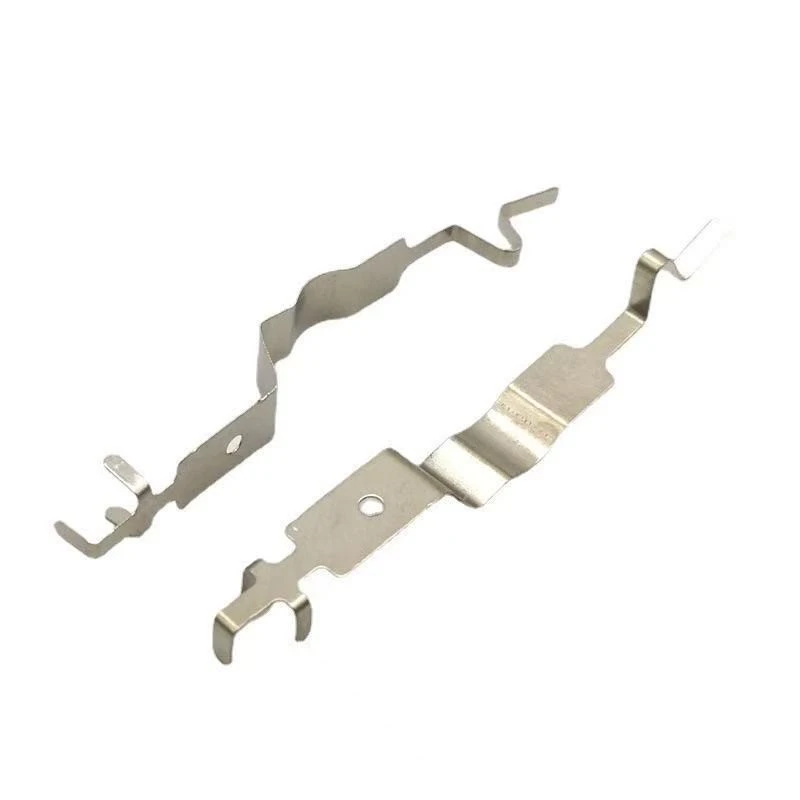
Another interesting shape is the quarter - elliptical leaf spring. This is a shorter and more compact version of the semi - elliptical spring. It's often used in applications where space is limited. Quarter - elliptical springs are commonly found in some older cars or small trailers. They work well in situations where the load is relatively light and the movement is more restricted. However, they may not be as effective in handling large vertical loads as their semi - elliptical counterparts.
Now, let's talk about the parabolic leaf spring. This shape is a bit more advanced. Parabolic leaf springs are thinner in the middle and thicker at the ends. This design allows for a more progressive spring rate. What does that mean? Well, when the load on the spring is light, the spring is relatively flexible. But as the load increases, the spring becomes stiffer. This is a huge advantage in applications where the load can vary significantly, like in commercial trucks. The parabolic shape also reduces the weight of the spring compared to traditional leaf springs, which can improve fuel efficiency. Many modern vehicles are starting to use parabolic leaf springs to enhance performance and reduce maintenance costs.
The shape of a leaf spring also affects its durability. For instance, a well - designed curve can prevent stress concentration at certain points. If a spring has sharp bends or uneven surfaces, it's more likely to develop cracks over time due to repeated stress. A smooth, continuous curve distributes the stress more evenly, increasing the lifespan of the spring.
In addition to the overall curvature, the number of leaves in a leaf spring stack can also influence performance. More leaves generally mean a stiffer spring, which can handle heavier loads. But too many leaves can also make the spring less flexible. So, finding the right balance between the number of leaves and the shape of the leaves is crucial.
Now, let's look at how different shapes are used in specific applications. In the marine industry, Boat Leaf Springs are designed to withstand the harsh conditions of the water. They often have a shape that provides good shock absorption and corrosion resistance. The shape helps in keeping the boat stable in rough seas, reducing the impact of waves on the vessel.
For trailers, Trailer Slipper Leaf Springs are commonly used. These springs have a unique shape that allows for a more compact design. They're attached to the trailer axle in a way that provides support while also allowing for some movement. This is important because trailers need to be able to navigate different terrains without losing their load.
In high - end applications where precision is key, Stainless Steel Leaf Spring are popular. The shape of these springs is carefully engineered to meet specific performance criteria. Stainless steel is used for its strength and corrosion resistance, and the shape of the spring ensures that it can perform optimally in demanding environments.
As a leaf spring supplier, I know that choosing the right shape is crucial for getting the best performance out of a leaf spring. Whether you're in the automotive, marine, or industrial sector, understanding how the shape affects performance can save you time and money in the long run. If you're looking for high - quality leaf springs for your specific application, don't hesitate to reach out. We can help you select the right shape and material to meet your requirements. Our team of experts is always ready to assist you in making the best decision for your project.
In conclusion, the shape of a leaf spring is a critical factor that determines its performance, durability, and suitability for different applications. By carefully considering the shape, you can ensure that your leaf springs operate at their best, providing reliable support and a smooth ride. So, if you're in the market for leaf springs, give us a call or drop us a message. We're here to help you find the perfect solution for your needs.
References:
- "Automotive Suspension Systems" by John Doe
- "Marine Engineering Handbook" by Jane Smith
- "Industrial Spring Design and Applications" by Robert Johnson