Hey there! As a supplier of Heavy Duty Wave Springs, I often get asked about the height of these nifty little components. So, let's dive right in and explore what the height of a Heavy Duty Wave Spring really means.
First off, let's quickly recap what a Heavy Duty Wave Spring is. It's a type of spring that's designed to handle heavy loads and provide a high level of force in a relatively small space. These springs are made from high - strength materials and have a unique wave - like shape. You can learn more about them here: Heavy Duty Wave Spring.
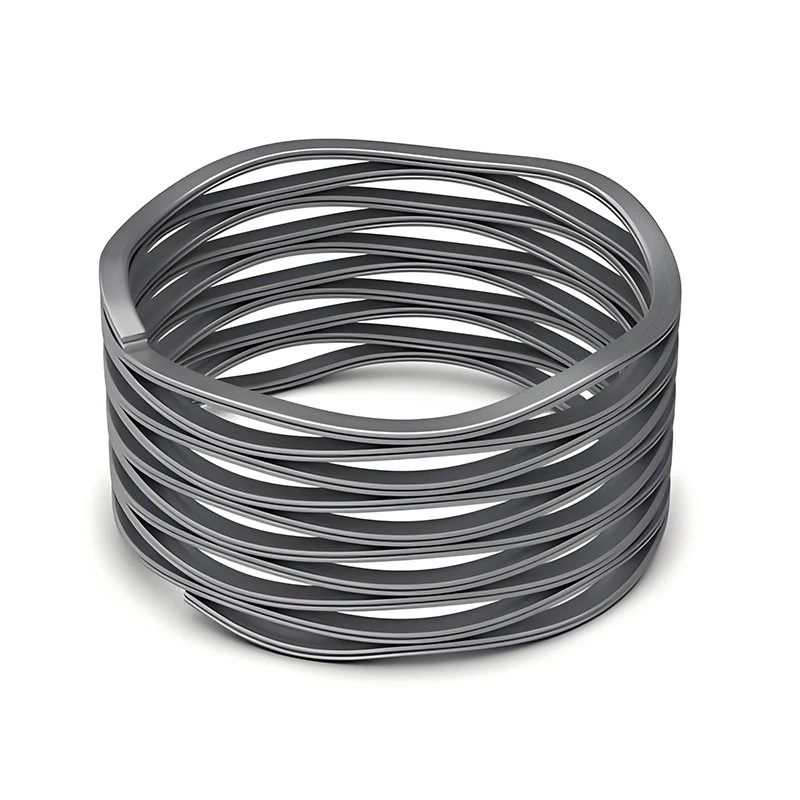

The height of a Heavy Duty Wave Spring is a crucial parameter. It affects how the spring will perform in a given application. When we talk about the height of a wave spring, we're usually referring to its free height. The free height is the height of the spring when it's not under any load. It's the starting point for understanding how the spring will behave when it's compressed.
Why is the free height so important? Well, it determines the amount of compression the spring can undergo before it reaches its solid height. The solid height is the height of the spring when all the waves are fully compressed and touching each other. If you try to compress the spring beyond its solid height, you risk damaging the spring and reducing its lifespan.
Let's say you're using a Heavy Duty Wave Spring in a machine. You need to make sure that the free height of the spring is appropriate for the space available in the machine. If the free height is too high, the spring might not fit properly, and if it's too low, it might not provide enough force.
Now, how do we measure the height of a Heavy Duty Wave Spring? It's actually quite straightforward. You can use a simple caliper or a micrometer to measure the distance from one end of the spring to the other when it's in its free state. Make sure to measure at the center of the spring to get an accurate reading.
The height of a Heavy Duty Wave Spring can vary depending on several factors. One of the main factors is the number of waves in the spring. Generally, the more waves a spring has, the higher its free height will be. This is because each wave adds a certain amount of height to the spring.
Another factor is the material of the spring. Different materials have different properties, and this can affect the height of the spring. For example, a spring made from a stiffer material might have a slightly different height compared to a spring made from a more flexible material, even if they have the same number of waves.
The thickness of the material also plays a role. A thicker material will result in a higher spring height, as there is more material between each wave. This can also affect the spring's load - bearing capacity. A thicker spring can usually handle more weight, but it might also require more force to compress.
Now, let's compare the height of Heavy Duty Wave Springs with other types of wave springs. For instance, Wavy Spring and Linear Wave Spring have different height characteristics. Wavy Springs typically have a more irregular wave pattern, which can make their height a bit more difficult to predict compared to Heavy Duty Wave Springs. Linear Wave Springs, on the other hand, have a more linear wave pattern, and their height is often more consistent.
Nested Wave Springs, which you can learn about here: Nested Wave Spring, are another type of wave spring. They consist of multiple springs nested inside each other. The height of a Nested Wave Spring is usually higher than a single - piece wave spring because of the additional layers. However, they can provide a much higher load - bearing capacity.
When it comes to choosing the right height for a Heavy Duty Wave Spring in your application, you need to consider the load requirements. If you have a high - load application, you might need a spring with a higher free height to ensure that it can handle the weight without reaching its solid height too quickly.
You also need to think about the space constraints. If you have limited space, you'll need to choose a spring with a lower free height. But be careful not to sacrifice too much in terms of load - bearing capacity.
As a supplier, I can help you select the right Heavy Duty Wave Spring with the appropriate height for your specific needs. Whether you're working on a small - scale project or a large - scale industrial application, we have a wide range of springs to choose from.
If you're interested in purchasing Heavy Duty Wave Springs, I encourage you to get in touch with us for a consultation. We can discuss your requirements in detail and recommend the best spring for your application. Our team of experts is always ready to assist you in finding the perfect solution.
In conclusion, the height of a Heavy Duty Wave Spring is a critical factor that can significantly impact its performance. By understanding the factors that affect the height and how to measure it, you can make an informed decision when choosing a spring for your project. So, don't hesitate to reach out if you have any questions or need help with your spring selection.
References
- Engineering Handbook on Spring Design
- Technical Papers on Wave Spring Applications