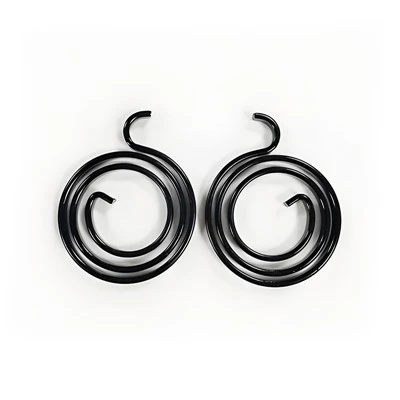
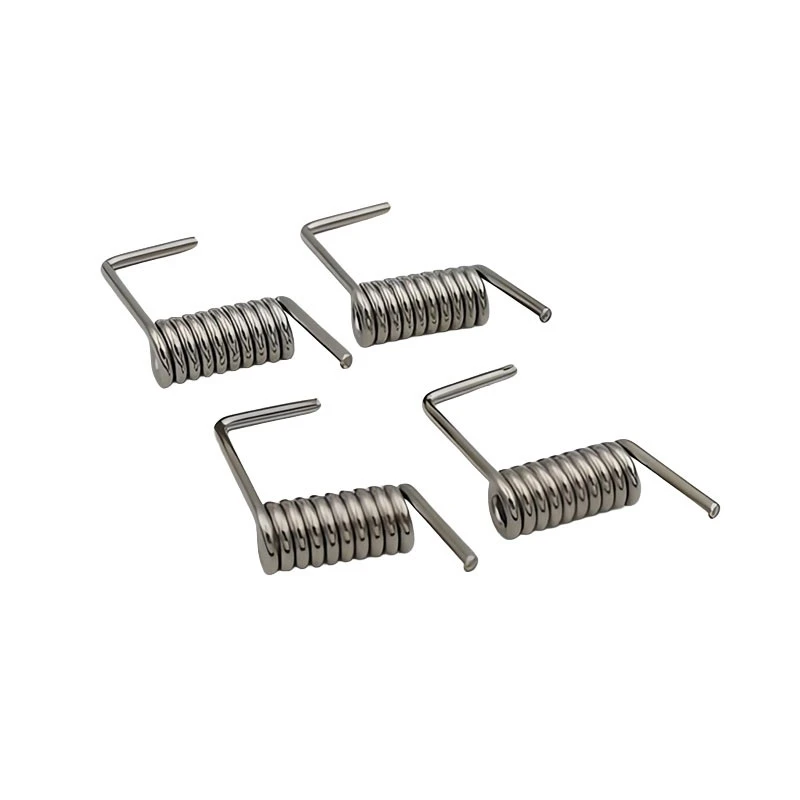
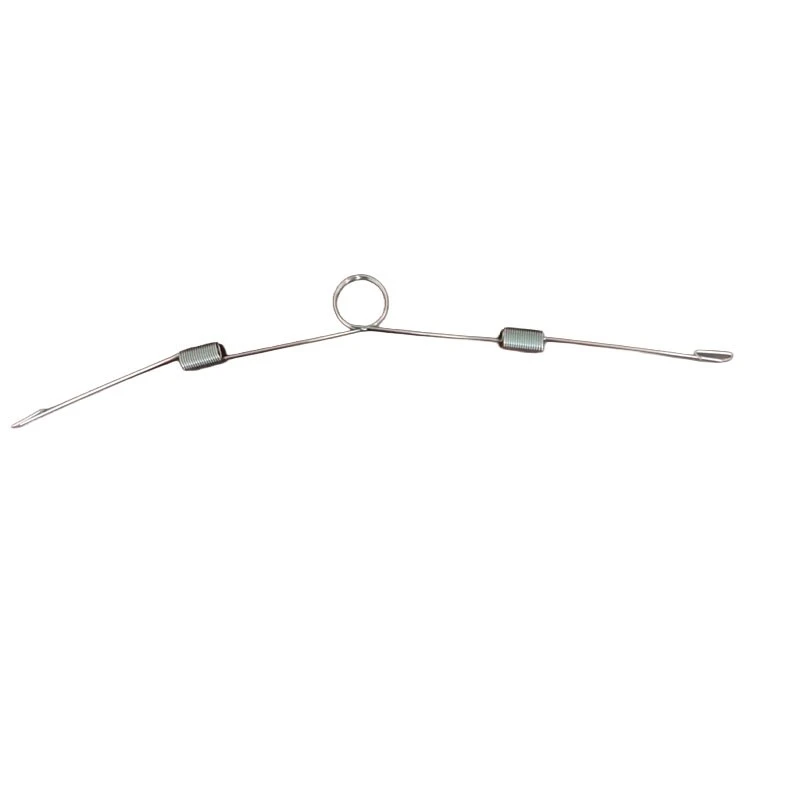
As a torsion spring supplier, I've witnessed firsthand the profound impact of material hardness on the performance of these essential components. Torsion springs are mechanical devices that store and release rotational energy, commonly used in various applications such as automotive, aerospace, and industrial machinery. The hardness of the material used to manufacture these springs plays a crucial role in determining their strength, durability, and overall performance.
Understanding Material Hardness
Material hardness is a measure of a material's resistance to deformation, indentation, or scratching. It is typically determined using standardized tests such as the Rockwell, Brinell, or Vickers hardness tests. The hardness of a material is influenced by several factors, including its chemical composition, heat treatment, and microstructure.
In the context of torsion springs, the hardness of the material affects its ability to withstand the stresses and strains associated with repeated torsional loading. A harder material generally has a higher yield strength and can withstand greater forces without permanent deformation. However, excessive hardness can also make the material brittle and prone to cracking, which can significantly reduce the spring's lifespan.
Impact on Spring Strength
One of the primary ways material hardness affects the performance of a torsion spring is by influencing its strength. The strength of a torsion spring is determined by its ability to resist deformation under load and return to its original shape when the load is removed. A harder material can generally withstand higher loads without yielding, resulting in a stronger spring.
For example, Carbon Steel Torsion Spring are known for their high strength and durability. Carbon steel has a relatively high carbon content, which contributes to its hardness and strength. When used to manufacture torsion springs, carbon steel can provide excellent resistance to torsional forces, making it suitable for applications that require high load capacity.
On the other hand, Stainless Steel Torsion Spring are often used in applications where corrosion resistance is a primary concern. While stainless steel is generally not as hard as carbon steel, it can still provide sufficient strength for many applications. The hardness of stainless steel can be adjusted through heat treatment, allowing for the production of springs with varying levels of strength and durability.
Effect on Spring Fatigue Life
Another important aspect of torsion spring performance is its fatigue life. Fatigue is the process by which a material fails under repeated loading, even if the applied stress is below its yield strength. The fatigue life of a torsion spring is influenced by several factors, including the material hardness, the stress amplitude, and the number of loading cycles.
A harder material can generally withstand more loading cycles before fatigue failure occurs. This is because a harder material has a higher resistance to crack initiation and propagation, which are the primary mechanisms of fatigue failure. However, as mentioned earlier, excessive hardness can also make the material brittle and prone to cracking, which can reduce the spring's fatigue life.
For example, Round Wire Torsion Spring made from high-hardness materials such as music wire or chrome silicon steel can have a longer fatigue life compared to springs made from softer materials. These materials are commonly used in applications that require high cycle life, such as automotive engines and industrial machinery.
Influence on Spring Deflection and Stiffness
The material hardness also affects the deflection and stiffness of a torsion spring. Deflection is the amount of rotation or displacement that a spring undergoes when a load is applied, while stiffness is the resistance of the spring to deflection. A harder material generally has a higher modulus of elasticity, which means it is stiffer and less likely to deflect under load.
For example, Flat Wire Torsion Spring made from a hard material such as stainless steel or carbon steel will have a higher stiffness compared to springs made from a softer material such as brass or copper. This can be advantageous in applications where precise control of the spring's deflection is required, such as in precision instruments and medical devices.
Considerations for Material Selection
When selecting a material for a torsion spring, it is important to consider the specific requirements of the application. Factors such as the load capacity, fatigue life, corrosion resistance, and deflection characteristics should all be taken into account.
In general, harder materials are suitable for applications that require high strength and durability, while softer materials are more appropriate for applications that require flexibility and corrosion resistance. However, it is also important to balance the hardness of the material with its ductility and toughness to ensure that the spring can withstand the stresses and strains associated with the application.
For example, Square Torsion Spring made from a hard material such as carbon steel may be suitable for applications that require high load capacity and long fatigue life, but may not be suitable for applications that require flexibility or corrosion resistance. In such cases, a softer material such as stainless steel or brass may be a better choice.
Conclusion
In conclusion, the material hardness has a significant impact on the performance of a torsion spring. It affects the spring's strength, fatigue life, deflection, and stiffness, and plays a crucial role in determining its suitability for a particular application. As a torsion spring supplier, I understand the importance of selecting the right material for each application to ensure optimal performance and reliability.
If you are in need of high-quality torsion springs for your application, I encourage you to contact me to discuss your specific requirements. I can provide you with expert advice on material selection, design, and manufacturing to ensure that you get the best possible springs for your needs.
References
- Callister, W. D., & Rethwisch, D. G. (2014). Materials Science and Engineering: An Introduction. Wiley.
- Shigley, J. E., Mischke, C. R., & Budynas, R. G. (2004). Mechanical Engineering Design. McGraw-Hill.
- SAE International. (2019). SAE Handbook. SAE International.