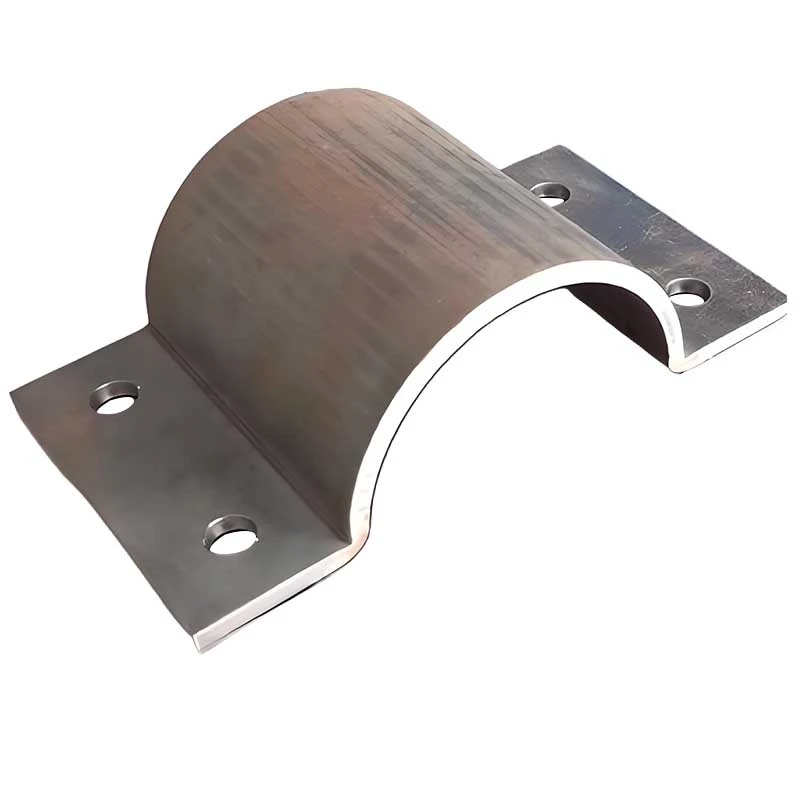
Basic Properties of Stamped Parts
Stamped parts are workpieces obtained by applying external force to sheet metal using a press and dies, causing plastic deformation or separation. These products essentially belong to the broad category of metal forming and are fundamental components in the field of machinery manufacturing. From a material properties perspective, common stamped parts include those made of steel, aluminum, and copper plates, characterized by uniform thickness and reliable strength.
Role in Industrial Scenarios
In the manufacturing chain, stamped parts play the role of "industrial building blocks":
Structural Support: Constructing load-bearing components such as equipment shells and brackets.
Functional Realization: Forming transmission elements such as gears and connectors.
Precision Fit: Manufacturing precision components such as shielding covers and contacts in electronic devices.
Mass Production Advantage: Suitable for large-scale standardized production in industries such as automobiles and home appliances.
New Trends in Technological Development
Modern stamping technology is breaking through traditional boundaries:
Composite Processes: Hybrid processing methods combining laser cutting and stamping.
Intelligent Production: Utilizing visual recognition to automatically adjust stamping parameters.
Material Innovation: Expanding the application of new materials such as high-strength steel and composite materials.
Precision Evolution: Tolerances for some precision stamped parts can reach ±0.01mm level.