Hey there! As a heavy-duty wave spring supplier, I often get asked about the customization requirements for these bad boys. Heavy-duty wave springs are super versatile and can be used in a wide range of applications, from automotive to aerospace, and everything in between. So, let's dive into what you need to know when it comes to customizing heavy-duty wave springs.
Material Selection
The first thing to consider when customizing heavy-duty wave springs is the material. The choice of material depends on the specific application and the environment in which the spring will operate. Some common materials for heavy-duty wave springs include stainless steel, high-carbon steel, and alloy steels.
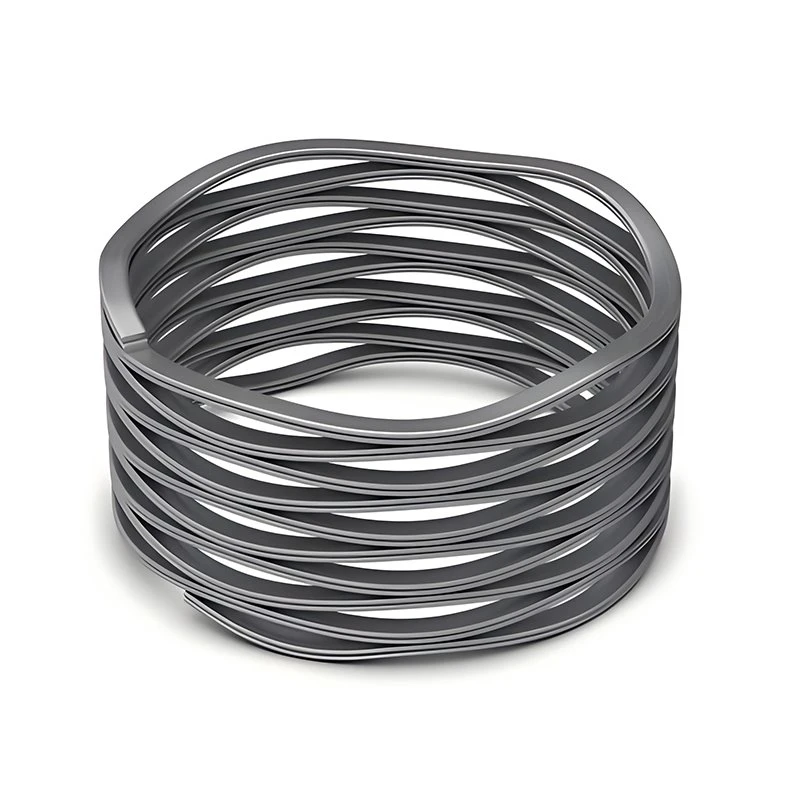

Stainless steel is a popular choice because it's corrosion-resistant and can withstand high temperatures. It's also relatively easy to work with, which makes it a good option for custom designs. High-carbon steel, on the other hand, is known for its high strength and durability. It's often used in applications where the spring needs to withstand heavy loads and high stress. Alloy steels are a combination of different metals, which gives them unique properties such as high strength, corrosion resistance, and heat resistance.
When choosing a material, you also need to consider the surface finish. A smooth surface finish can reduce friction and wear, which can extend the life of the spring. You might also want to consider a coating or plating to further enhance the corrosion resistance of the spring.
Dimensions and Tolerances
Another important aspect of customizing heavy-duty wave springs is the dimensions and tolerances. The dimensions of the spring, such as the outer diameter, inner diameter, height, and number of waves, need to be carefully specified to ensure that the spring fits properly in the application.
Tolerances are also crucial. Tight tolerances can ensure that the spring performs consistently and meets the required specifications. However, tighter tolerances can also increase the cost of production. So, you need to find a balance between the required precision and the cost.
For example, if you're using the spring in a high-precision application, you might need to specify very tight tolerances. But if the application is less critical, you can afford to have looser tolerances, which can save you some money.
Load and Deflection Requirements
The load and deflection requirements are probably the most important factors when it comes to customizing heavy-duty wave springs. The load is the amount of force that the spring needs to withstand, and the deflection is the amount of compression or extension that the spring can undergo.
You need to accurately determine the load and deflection requirements based on the specific application. This might involve conducting some tests or simulations to understand the forces that the spring will be subjected to.
Once you have the load and deflection requirements, you can work with a spring manufacturer to design a spring that meets these specifications. The manufacturer will use specialized software and engineering knowledge to calculate the appropriate dimensions, number of waves, and material properties to achieve the desired load and deflection characteristics.
End Conditions
The end conditions of the heavy-duty wave spring are also important. There are different types of end conditions, such as closed ends, open ends, and ground ends.
Closed ends provide a flat surface at the ends of the spring, which can be useful for applications where the spring needs to be seated properly. Open ends, on the other hand, allow for more flexibility and can be used in applications where the spring needs to be compressed or extended more freely. Ground ends are used when a very smooth and flat surface is required at the ends of the spring.
The choice of end conditions depends on the specific application and the requirements of the system in which the spring will be used.
Special Features and Custom Designs
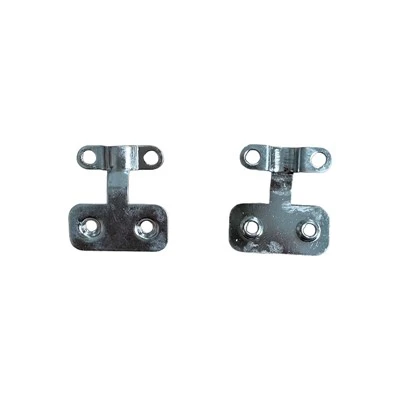
In some cases, you might need to add special features or custom designs to the heavy-duty wave spring. For example, you might need to add holes or slots for mounting purposes, or you might want to have a specific shape or profile for the spring.
These special features can add functionality to the spring and make it more suitable for the specific application. However, they can also increase the complexity of the design and the cost of production. So, you need to carefully consider whether these special features are really necessary.
Related Products
If you're interested in wave springs, you might also want to check out some related products. For example, Linear Wave Spring is a type of wave spring that has a linear shape and can be used in applications where a linear force is required. Wavy Spring is another type of wave spring that has a more irregular wave pattern and can provide unique load and deflection characteristics. And Nested Wave Spring is a design where multiple wave springs are nested together to provide a higher load capacity.
Contact for Customization and Procurement
If you have specific customization requirements for heavy-duty wave springs, don't hesitate to reach out. We're here to help you design and manufacture the perfect spring for your application. Whether you need a small batch for prototyping or a large production run, we have the expertise and capabilities to meet your needs.
Just let us know your requirements, and we'll work with you to come up with a solution that fits your budget and timeline. We're committed to providing high-quality products and excellent customer service. So, if you're in the market for heavy-duty wave springs, give us a shout and let's start the conversation.
References
- "Spring Design Handbook", various authors
- Technical papers on wave spring applications in automotive and aerospace industries.