As a provider of Nested Wave Springs, I understand the critical role that temperature stability plays in the performance and longevity of these components. Nested Wave Springs, available here, are widely used in various industries, including automotive, aerospace, and machinery, where they are often exposed to extreme temperature conditions. In this blog, I will share some effective strategies to improve the temperature stability of Nested Wave Springs.
Understanding the Impact of Temperature on Nested Wave Springs
Before delving into the solutions, it's essential to understand how temperature affects Nested Wave Springs. Temperature changes can cause several issues, such as altering the spring's mechanical properties, dimensional stability, and material structure.
When the temperature rises, the material of the Nested Wave Spring may expand, leading to a change in its dimensions. This can result in a decrease in the spring's preload and stiffness, affecting its ability to provide the required force. On the other hand, extremely low temperatures can make the material brittle, increasing the risk of cracking and failure.
Selection of High - Temperature Resistant Materials
One of the most fundamental ways to improve temperature stability is through the careful selection of materials. For applications where high temperatures are expected, materials with excellent heat resistance should be chosen.
Stainless steel alloys, such as 17 - 7PH, are popular choices for Nested Wave Springs operating in elevated temperature environments. These alloys can maintain their mechanical properties at relatively high temperatures, providing stable performance. They also offer good corrosion resistance, which is an added advantage in many industrial settings.
In some cases, nickel - based alloys like Inconel can be used. Inconel has outstanding high - temperature strength and oxidation resistance. It can withstand temperatures up to 1000°C (1832°F) without significant loss of its mechanical properties, making it suitable for the most demanding high - temperature applications.
Heat Treatment Processes
Proper heat treatment can significantly enhance the temperature stability of Nested Wave Springs. Heat treatment processes can modify the material's microstructure, improving its hardness, strength, and thermal stability.
Quenching and tempering are common heat treatment methods. Quenching involves rapidly cooling the spring from a high temperature, which hardens the material. Subsequently, tempering is carried out to relieve internal stresses and improve ductility. For high - temperature applications, the tempering temperature should be carefully selected to ensure that the spring retains its strength and resilience at elevated temperatures.
Another heat treatment process is annealing. This process involves heating the spring to a specific temperature and then slowly cooling it. Annealing can reduce internal stresses, improve the material's microstructure, and enhance its thermal stability.
Design Optimization for Thermal Expansion
The design of Nested Wave Springs can be optimized to accommodate thermal expansion. One approach is to incorporate additional clearances in the spring's design. By allowing for some expansion space, the spring can expand freely without causing excessive stress or deformation.
When designing the spring, the coefficient of thermal expansion (CTE) of the material should be taken into account. Different materials have different CTEs, and by understanding this property, the spring design can be adjusted to minimize the negative effects of thermal expansion. For example, if a material with a relatively high CTE is used, more generous clearances should be provided.
Surface Coatings
Applying appropriate surface coatings can also improve the temperature stability of Nested Wave Springs. Coatings can provide a protective layer that helps to prevent oxidation and corrosion, which can be exacerbated at high temperatures.
Ceramic coatings are often used for high - temperature applications. They have excellent heat resistance and can act as a thermal barrier, reducing the amount of heat transferred to the spring material. Additionally, ceramic coatings can improve the wear resistance of the spring, extending its service life.
Another option is to use a high - temperature paint coating. These paints are formulated to withstand extreme temperatures and can provide a protective and aesthetically pleasing finish to the Nested Wave Spring.
Testing and Quality Control
To ensure the temperature stability of Nested Wave Springs, rigorous testing and quality control are essential. Temperature cycling tests can be conducted to simulate real - world operating conditions. These tests involve subjecting the springs to multiple cycles of heating and cooling, monitoring their performance at different temperature points.
In addition to temperature cycling tests, other tests such as hardness testing, dimensional inspection, and stress analysis can also be carried out. By conducting these tests, any potential issues related to temperature stability can be identified early, and corrective measures can be taken.
Comparison with Other Types of Wave Springs
It's worth comparing Nested Wave Springs with other types of wave springs, such as Wavy Springs, Linear Wave Springs, and Heavy Duty Wave Springs, in terms of temperature stability.
Wavy Springs are relatively simple in design and may have limitations in terms of temperature stability compared to Nested Wave Springs. Their single - layer structure may be more susceptible to the effects of temperature changes.
Linear Wave Springs, while offering some unique advantages, may also face challenges in high - temperature applications. Their design may not provide the same level of protection against thermal expansion and dimensional changes as Nested Wave Springs.
Heavy Duty Wave Springs are designed to handle high loads, but their temperature stability also depends on the material and design. Nested Wave Springs, with their multi - layer structure, often have better temperature stability due to the way the layers can distribute stress and accommodate thermal expansion.
Conclusion and Call to Action
Improving the temperature stability of Nested Wave Springs is crucial for ensuring their reliable performance in various applications. By carefully selecting materials, applying appropriate heat treatment processes, optimizing the design, using surface coatings, and conducting thorough testing, the negative effects of temperature changes can be minimized.
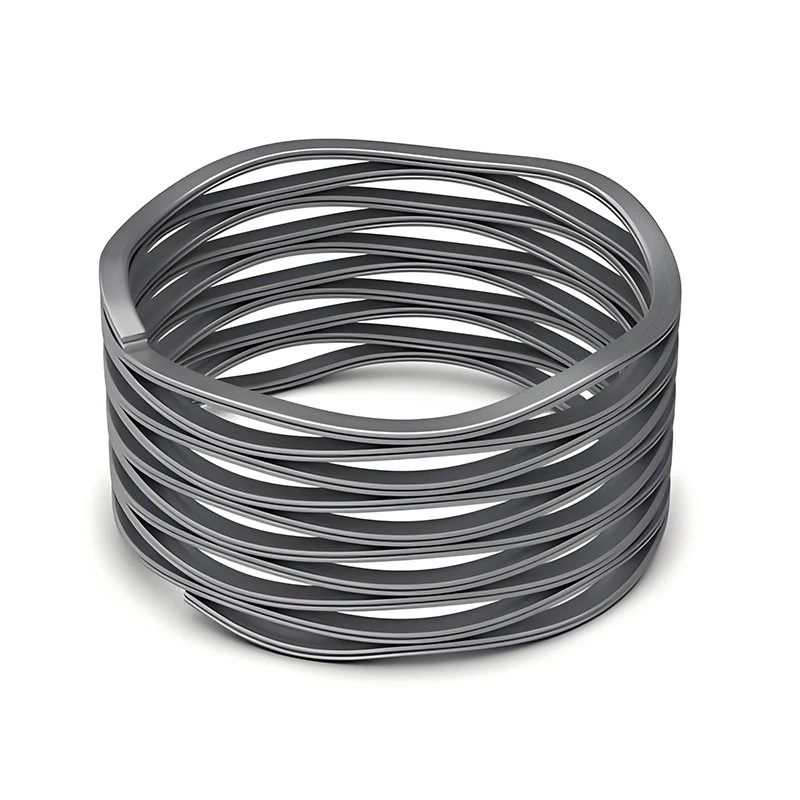

If you are in need of high - quality Nested Wave Springs with excellent temperature stability, we are here to help. Our team of experts can work with you to understand your specific requirements and provide customized solutions. Contact us to discuss your procurement needs and let us help you find the perfect Nested Wave Springs for your application.
References
- ASM Handbook Volume 4: Heat Treating. ASM International.
- Metals Handbook Desk Edition, 3rd Edition. ASM International.
- Design of Machine Elements, 8th Edition. Robert L. Norton.